
For billions of years, biological evolution progressed through the slow, random mechanisms of genetic mutation and natural selection. Today, the convergence of deep generative models and automated robotic synthesis has turned biology into a programmable engineering discipline. Rather than discovering existing natural enzymes, scientists are designing novel molecular machines from scratch to address humanity's grandest challenges.
De Novo Protein Generation with Diffusion Models
The breakthrough that catalyzed this revolution was the adaptation of generative diffusion architectures—originally developed for image synthesis—to molecular geometry. Models like RFdiffusion treat the three-dimensional backbone of proteins as continuous coordinate trajectories, gradually de-noising random atomic clouds into hyper-stable tertiary structures targeted against specific cellular receptors.
Once a structural backbone is synthesized, inverse folding models predict the exact amino acid sequence required to ensure thermodynamic stability. What previously consumed years of trial-and-error laboratory crystallography is now designed on GPU clusters in minutes.
High-Throughput Robotic Wet Labs
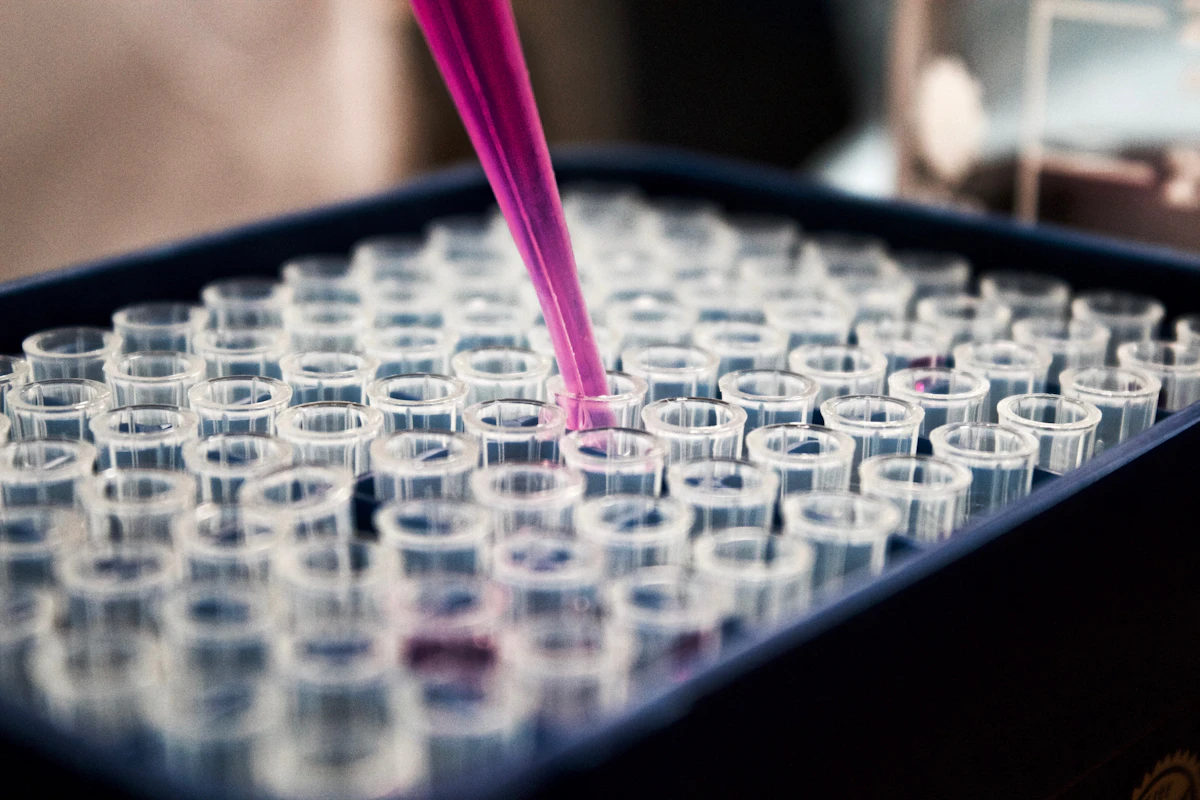
The bio-digital loop is completed by automated cloud laboratories. Digital DNA sequences designed in silico are transmitted directly to automated synthesizers that print oligonucleotides with enzymatic precision. Liquid-handling robots express the designed proteins in yeast or bacterial cultures, characterizing their binding kinetics and thermal resilience in real-time telemetry pipelines.
"We have crossed the threshold from reading the genetic code to editing it, and now to authoring novel biological software that never existed in the natural tree of life."
Targeted Oncology, Plastic Degradation, and Carbon Capture
The societal applications of de novo enzymes are staggering. Engineered biocatalysts capable of depolymerizing PET plastics into benign organic monomers in hours are entering pilot recycling facilities. Simultaneously, synthetic biologics tailored to recognize and dismantle mutant oncogenic markers with single-molecule specificity are entering early-phase human trials.
As genetic compilers mature, the boundary between software engineering and molecular biology will dissolve, inaugurating an era of clean industrial biomanufacturing.
Was this perspective insightful?
Your feedback helps fuel our independent editorial publication team.
Dr. Soraya Ghadimi
Chief Intelligence ContributorSpecializing in frontier systems engineering, high-throughput machine learning architectures, and the societal implications of emerging computing paradigms.


